
Sustainable Exhibit Design as ESG Strategy: How CMOs Get Show Spend Into the Annual Report
The Exhibition Industry Has a Waste Problem — Here’s What to Do About It
Sustainable exhibition stands are purpose-built display structures designed to minimize environmental harm across their full lifecycle from materials and production through to transport, reuse, and end-of-life recycling.
Quick answer: What makes an exhibition stand sustainable?
| Factor | What to Look For |
|---|---|
| Materials | Modular aluminum, FSC-certified wood, recycled cardboard, recycled tension fabric |
| Reusability | Structures reused across multiple shows; only graphics refreshed |
| Transport | Flat-pack design; lightweight materials; local supplier networks |
| Waste | 90%+ recyclable components; zero single-use elements |
| Energy | LED lighting; low-VOC water-based inks |
| Documentation | ESG reporting data; carbon footprint comparisons; recyclability credentials |
Here’s a number that should stop you in your tracks: the events industry generates over 100,000 tons of waste every single year. Most of that waste comes from exhibition stands built to last a few days, then destroyed.
That’s not just an environmental problem. In 2026 and 2027, it’s a brand problem. Corporate ESG mandates are tightening. Attendees notice. Boards ask questions. And marketing leaders are increasingly being judged not just on booth impact but on what gets left behind.
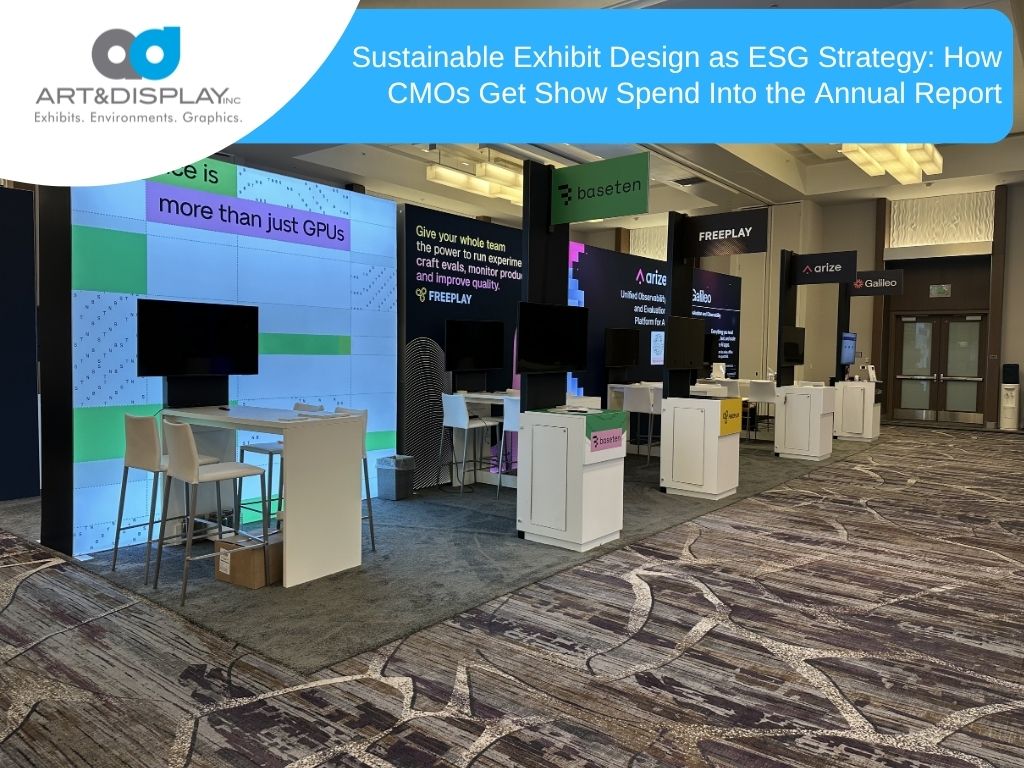
The good news? Sustainable exhibition stands have matured well beyond recycled cardboard and compromise. Today’s best systems modular aluminum frames, honeycomb board, recycled tension fabrics deliver premium design quality while dramatically cutting waste, transport emissions, and long-term costs.
This guide focuses strictly on the environmental impact, lifecycle costs, and material science behind green booth construction. For a look at our specific rental inventory, visit our Exhibit Rentals page. To review structural configurations, explore our Portable & Modular Exhibits gallery.
Designing High-Impact Eco-Friendly Exhibits for 2026 and 2027
We believe that choosing a green path should never mean compromising on visual power. As visual creators, we know that your booth is your brand’s physical handshake. Looking good on the show floor starts with looking great in the boardroom, and your reputation is on the line every time the exhibit doors open.
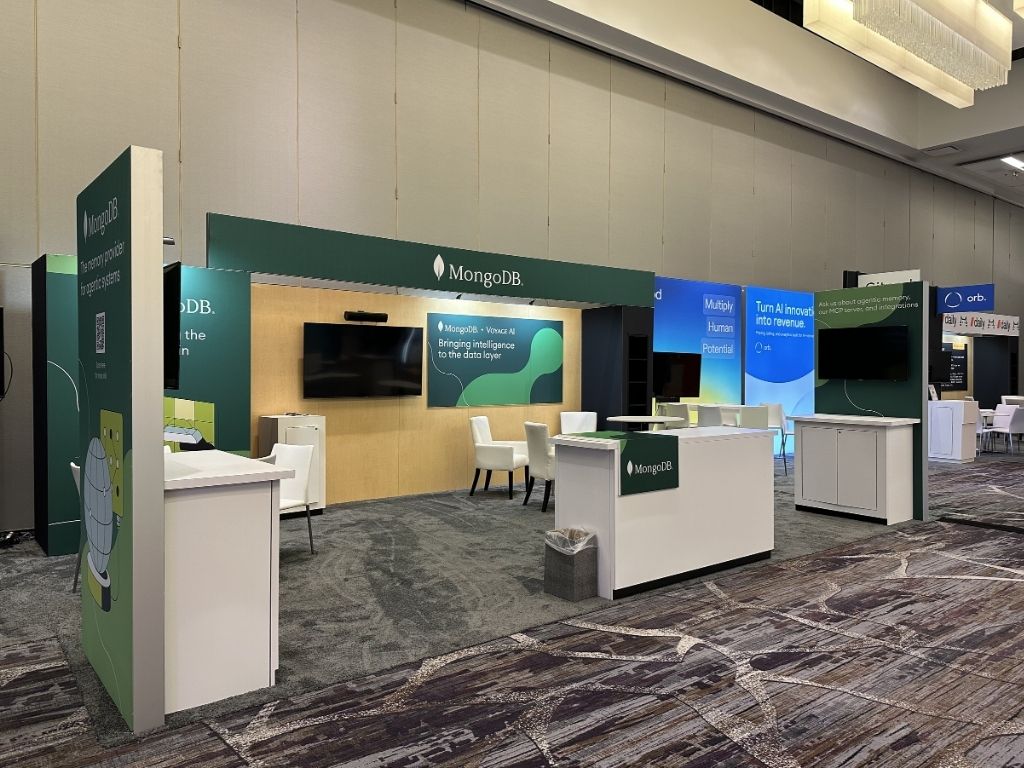
In 2026 and 2027, the trend is shifting away from heavy, over-built structures toward open, airy, and light-filled spaces. By utilizing smart architectural design, we can create breathtaking, high-impact environments that are entirely circular.
Designing with circularity in mind means planning for the entire lifecycle of the booth before a single piece is manufactured. It allows us to build stunning, custom architectural features like sweeping curves or multi-tiered display zones using components that can be completely disassembled, flat-packed, and redeployed. To explore how to seamlessly blend stunning design with environmental responsibility, read our guide on how to Reduce Environmental Impact at Your Next Trade Event.
1. The Core Materials Powering Modern Green Booths
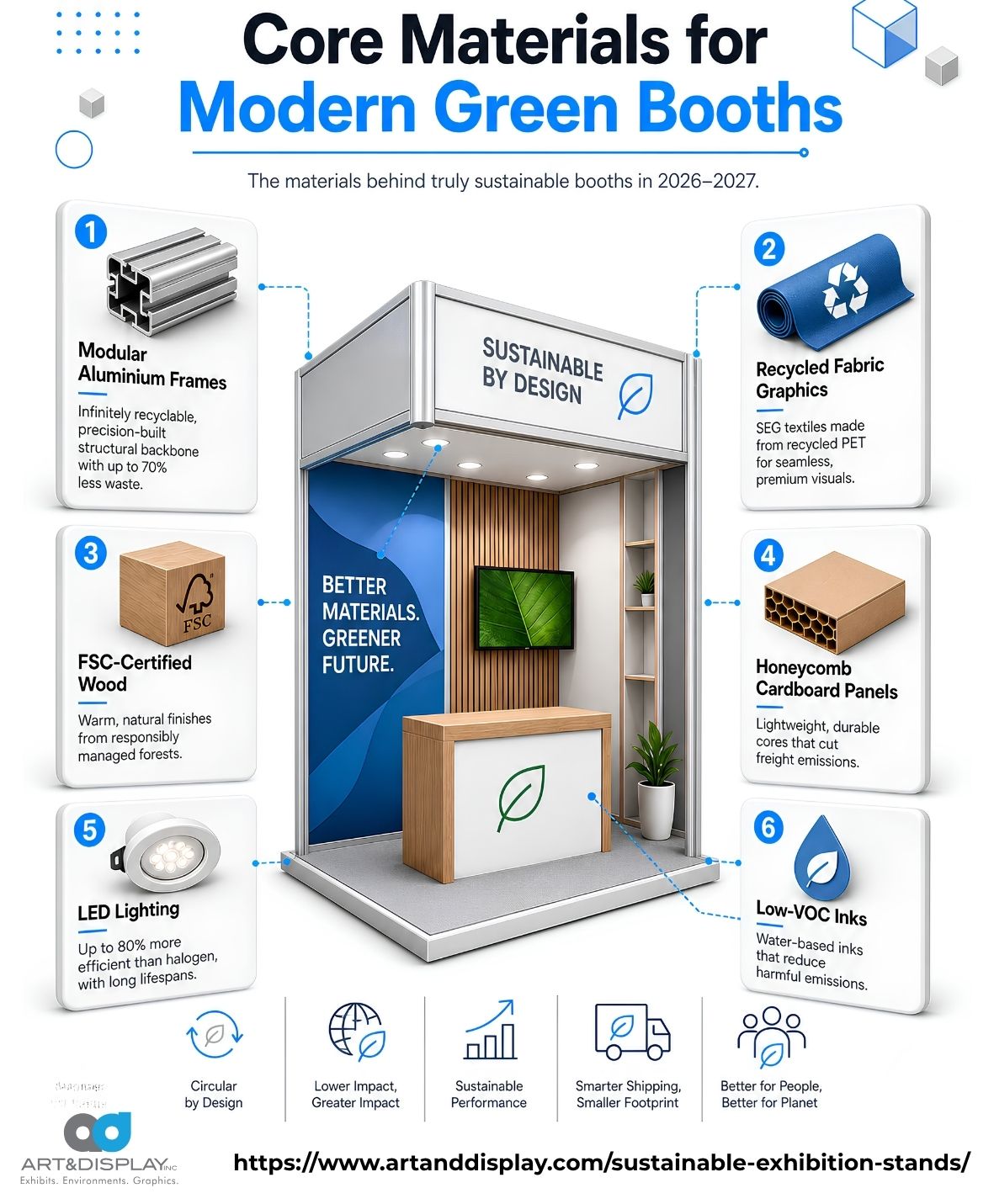
The foundation of any eco-friendly booth lies in its material DNA. If you want to build a truly green exhibit, these are the high-performance materials leading the industry in 2026 and 2027:
- Modular Aluminum Frames: Infinitely recyclable and incredibly durable, modular aluminum systems (like the engineered frames we use) serve as the structural backbone of sustainable booths. They produce up to 70% less material waste than traditional timber builds.
- Recycled Tension Fabric Graphics: Instead of single-use PVC banners, modern exhibits use Silicone Edge Graphics (SEG) made from recycled PET plastics (like reclaimed water bottles). These fabrics stretch tightly over aluminum frames for a seamless, premium look.
- FSC-Certified Wood: When natural wood textures are required for warmth and aesthetic appeal, we source exclusively from Forest Stewardship Council (FSC) certified forests. This ensures the timber is harvested responsibly without contributing to deforestation.
- Honeycomb Cardboard Panels: Engineered structural cardboard, such as Re-Board, is up to 70% lighter than traditional MDF or timber panels. This drastically cuts down on freight emissions while remaining remarkably strong and durable.
- LED Lighting: Modern LED arrays are up to 80% more energy-efficient than conventional halogen bulbs and have lifespans exceeding 70,000 hours, keeping energy consumption to a minimum.
- Low-VOC Water-Based Inks: By avoiding harsh, solvent-based printing methods, we ensure that booth graphics do not release harmful volatile organic compounds (VOCs) into the air during production or use.
To learn more about how these sustainable components come together in flexible configurations, check out our solutions for Portable & Modular Exhibits. For a deeper look into selecting eco-conscious materials, you can also read about Sustainable Exhibition Stands: Save Resources, Go Green.
2. Reusable vs. Single-Use: The Lifecycle Cost Benefits
As we look toward trade show strategies for 2026 and 2027, one of the greatest myths in trade show marketing is that sustainable choices must cost more. While custom, single-use organic fabrications can sometimes carry a premium upfront, modular and reusable systems are dramatically more cost-effective over their lifecycle.
Consider the “build and burn” model: you pay for raw timber construction, heavy transport, specialized labor, and landfill disposal fees for every single show. With a reusable modular system, you buy the structural hardware once and reuse it indefinitely, refreshing only the tension fabric graphics between events. Over a three-year program of three shows per year, a reusable modular system can easily save a significant portion of your marketing budget compared to building new custom timber booths each time.
Furthermore, lightweight materials like honeycomb cardboard and aluminum reduce shipping weight by up to 80%, leading to massive savings on freight and drayage fees (the material handling fees charged by venues).
| Feature / Metric | Traditional Custom Timber Build | Reusable Modular Aluminum / Cardboard Stand |
|---|---|---|
| Average Weight (6x3m Stand) | 1,200 – 1,500 kg | 250 – 300 kg (80% lighter) |
| Setup Time | 2 to 3 days (requires team of 6-8) | Under 2 hours (requires 2 workers, often tool-free) |
| Recyclability | 10% – 20% (mostly goes to landfill) | 90% – 100% recyclable |
| Landfill Waste Per Show | 800 – 1,200 kg | 0 kg (reused or recycled) |
| Transport Emissions | High (heavy freight volume) | Reduced by up to 60% (flat-pack) |
| Long-Term ROI | Low (re-purchased every show) | High (multi-year reuse, low drayage) |
By choosing to rent or invest in a modular system, you align your budget with your values. Explore your options in our breakdown of Cost Savings: Exhibit Rentals vs. Purchase and discover more tips on Saving Money on Trade Show Booths.
3. How to Measure, Report, and Prove Your ESG Impact
In 2026 and 2027, marketing directors aren’t just asked to deliver leads—they are asked to provide data for corporate Environmental, Social, and Governance (ESG) reporting. Fortunately, moving to sustainable exhibition stands provides measurable metrics that look fantastic in annual reports:
- Carbon Footprint Tracking: Traditional custom booths generate 500–700 kg of CO₂e from production and logistics. By contrast, lightweight modular and cardboard booths can have their carbon footprints calculated, minimized, and easily offset to net-zero through certified carbon offsetting programs (such as UN Climate Change partnerships).
- Waste Diversion Metrics: You can track and report the exact weight of materials diverted from landfills. Switching to a modular system allows you to boast a 90% to 100% waste diversion rate for your exhibit infrastructure.
- ESG Procurement Compliance: Many major trade shows, such as the upcoming events in Mountain View, California, and other Bay Area tech hubs, now actively favor or require sustainable exhibit designs. Providing official ESG documentation on material origins, FSC certifications, and recyclability helps secure your spot as an industry leader. Learn more about regional trade show standards by reviewing the upcoming sustainability expectations and layout requirements outlined in the TechBlick Future of Electronics Exhibitor Guidelines.
4. Step-by-Step Planning and Logistics for Eco-Friendly Events
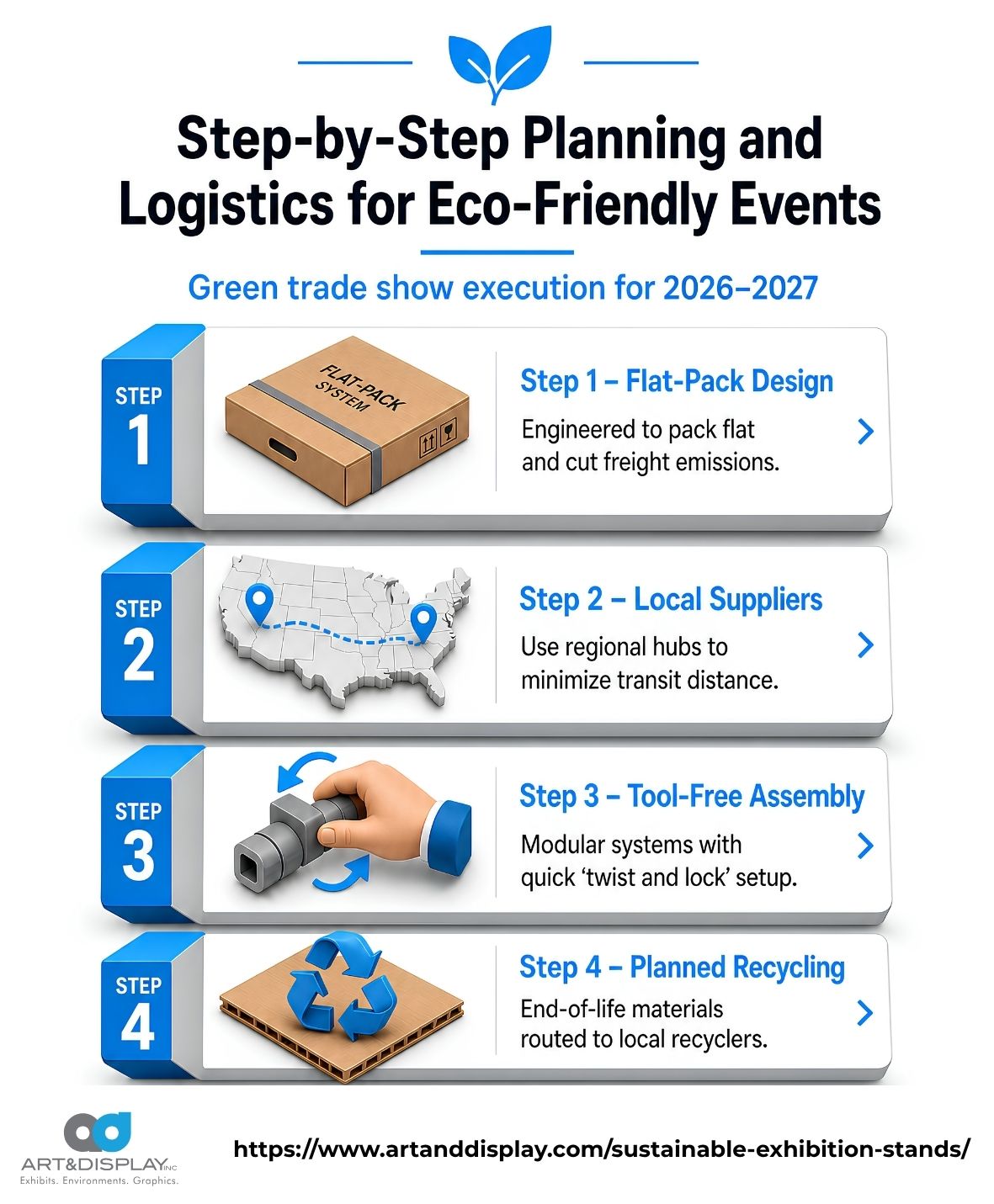
Executing a flawless, green trade show experience in 2026 and 2027 requires strategic planning and tight logistics. Here is how we manage the process to keep carbon emissions and waste to an absolute minimum:
- Step 1: Design for Flat-Pack Efficiency: We design structural components that pack completely flat. This minimizes shipping volume, allowing us to fit larger booths into smaller transport vehicles and reduce freight emissions by up to 60%.
- Step 2: Utilize Local Supplier Networks: Shipping a heavy booth across the country is both expensive and carbon-intensive. We leverage regional logistics hubs near major convention centers from San Francisco and Los Angeles to Las Vegas and Orlando to source materials locally and reduce transit distances.
- Step 3: Tool-Free Assembly: We focus on modular systems featuring patented “twist and lock” or slot-together connectors. This eliminates the need for power tools, reduces on-site installation waste, and slashes setup times from days to hours.
- Step 4: Planned End-of-Life Recycling: When a temporary element (like a cardboard panel or fabric graphic) reaches the end of its usable life, we don’t throw it in the venue dumpster. We coordinate with local recycling partners to ensure all materials are processed responsibly.
For a comprehensive look at how we streamline this process, check out our guide on Trade Show Logistics Planning.
5. Why CMOs Trust Green Architecture to Elevate Brand Reputation
As a CMO or Marketing Director planning for 2026 and 2027, your brand is on the line at every show. But so is your personal reputation. When your booth shines, your entire marketing strategy gets credit.
Choosing a sustainable exhibit is a powerful tool for brand storytelling. It shows your clients, partners, and competitors that your corporate environmental commitments are more than just words on a website; they are visible in how you conduct business.
Whether you are exhibiting at a massive tech expo in San Jose or a medical congress in Chicago, an elegant, sustainable booth attracts highly engaged, eco-conscious attendees. It sparks meaningful conversations about your green transition and positions your company as a forward-thinking industry leader.
If you want the flexibility of a custom look without the storage hassle, exploring Exhibit Rentals is a brilliant way to achieve premium, sustainable design on a flexible basis.
Key Takeaways: Proving the Value of Green Exhibit Design
Switching to an eco-friendly trade show strategy isn’t just about saving the planet; it’s about protecting your marketing budget and aligning with corporate ESG mandates.
- Eliminate the Build-and-Burn Cycle: Traditional timber booths generate massive landfill waste and high freight emissions.
- Embrace Modular Aluminum: Reusable frames with dye-sublimated fabric cut material waste by up to 90%.
- Track Your Metrics: Use your sustainable booth to gather hard data on waste diversion and carbon footprint reduction for your annual ESG report.
- Design for Flat-Packing: Lighter, flat-packed booths slash drayage and freight costs, proving to your board that sustainability drives long-term ROI.
Ready to transition your trade show program to a sustainable model?
Let the experts at Art & Display engineer a zero-waste, high-impact exhibit for your 2026 and 2027 show schedule.
Contact us today to explore modular and eco-friendly rental solutions.